

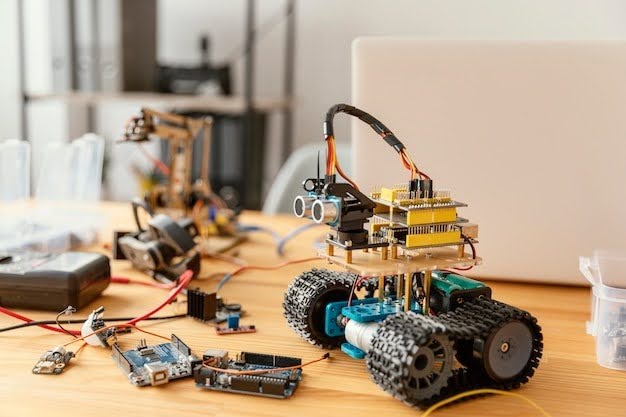
Robotics combines mechanical design, electronics, programming, and engineering to create machines that can perform specific tasks. Whether you are building a simple educational robot or a more advanced machine, understanding the main robot components is an important first step. Each component has a specific purpose, and these parts must work together properly for the robot to operate safely and efficiently.
1. Robot Frame
The frame provides the basic structure of a robot and supports its other parts. It can be made from materials such as aluminum, plastic, or other suitable materials depending on the robot’s purpose.
Brackets, plates, rails, screws, and fasteners are commonly used to connect the structure. A strong frame provides stability while leaving enough space for electronics, batteries, motors, and sensors.
2. Motors
Motors provide the movement required by many robots. They can power wheels, robotic arms, grippers, elevators, and other moving mechanisms.
Different motors provide different levels of speed and torque, so the correct choice depends on the robot’s weight and intended movements. Suitable motor selection can help improve the robot’s performance and efficiency.
3. Sensors
Sensors allow a robot to collect information from its surroundings and internal systems. Common examples include distance, light, touch, temperature, motion, and position sensors.
Robot components such as sensors help robots detect objects, measure movement, and respond to changes in their environment. Proper sensor placement is also important because the position of a sensor can affect the accuracy of the information it provides.
4. Microcontroller
A microcontroller acts as the control center of many robotic systems. It receives information from sensors, processes programmed instructions, and sends commands to motors and other devices.
Development boards can make it easier for beginners to learn robotics and programming. The appropriate controller depends on the number of inputs and outputs, processing requirements, communication options, and complexity of the project.
5. Motor Controllers and Drivers
Motors often require additional hardware to operate correctly. Motor drivers and controllers manage the electrical power supplied to motors and allow the control system to adjust their speed and direction.
These robot components should be compatible with both the selected motors and the main controller. Choosing suitable drivers can help improve motor control and reduce potential electrical problems.
6. Power Supply
Every robot needs a reliable power source. Batteries provide energy to motors, sensors, controllers, and other electronic systems. When choosing a battery, builders should consider voltage, capacity, size, weight, and expected operating time.
Chargers, switches, connectors, and power-distribution components can also help create an organized power system. Using the right power accessories can also help maintain a stable supply of energy during robot operation.
Final Thoughts
Understanding the main robot components can make robot building easier and more organized. Frames, motors, sensors, controllers, motor drivers, batteries, drivetrain systems, wiring, communication modules, and tools all have important roles. By choosing compatible parts and learning how they work together, beginners and experienced builders can create more reliable robotic projects while developing useful skills in programming, electronics, engineering, and problem-solving.